Name the Game Safaris • Dangerous Game

Quick Facts

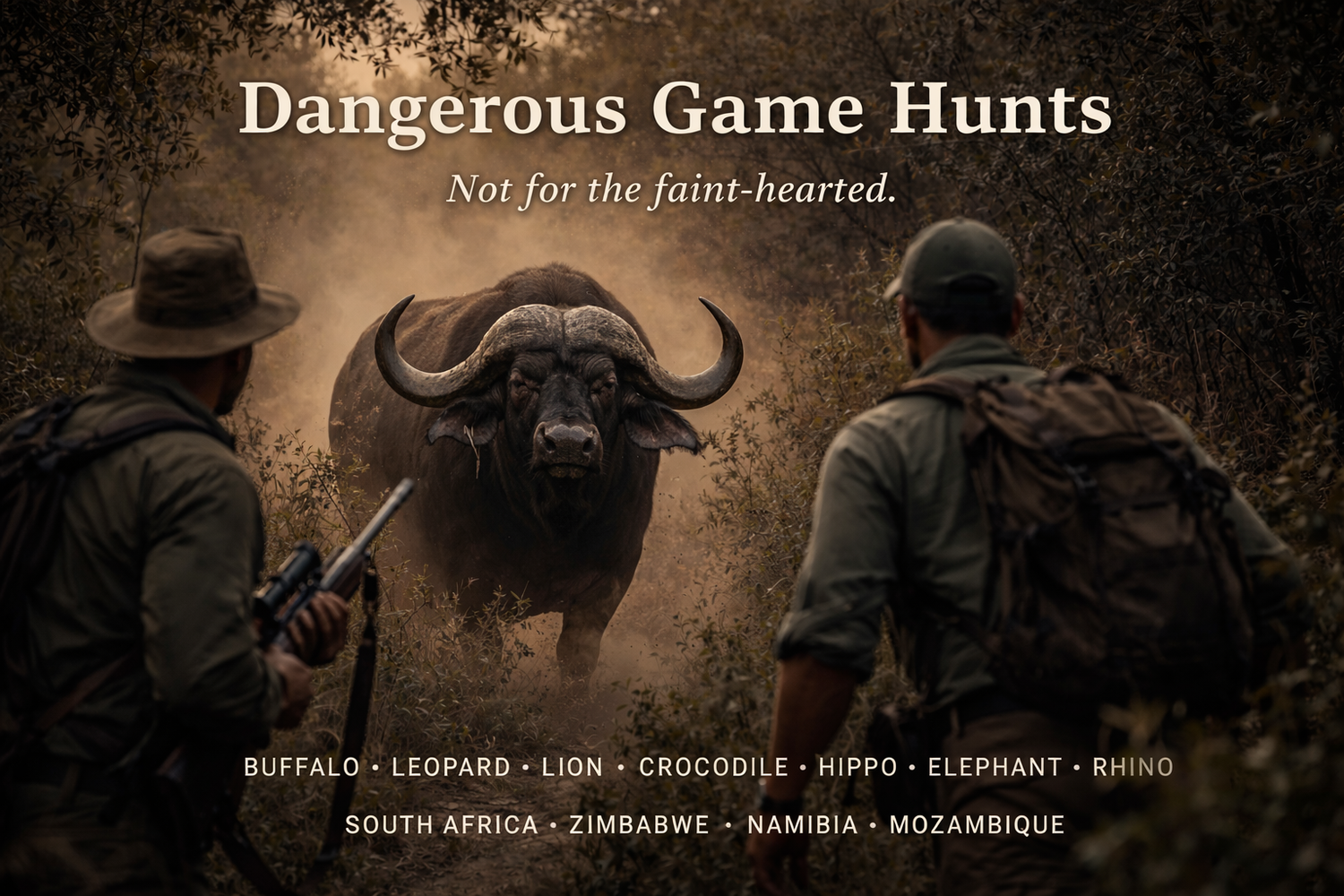
Close-range decisions. Real adrenaline. No shortcuts. Here’s what defines a proper dangerous game hunt — from planning to execution.

Dangerous game focus icon

Species

Dangerous Game Focus

Built around Africa’s most serious animals — hunts where respect, discipline, and decision-making matter more than anything.

Professional Hunter led icon

Guiding

PH-Led & Safety-First

Every hunt is run with a Professional Hunter and a tight safety system — clear communication, smart setups, and calm execution.

Tracking and close work icon

Hunt Style

Tracking & Close Work

These aren’t “long-range” hunts. Expect real tracking, close encounters, and moments that demand composure and precision.

Winter hunting conditions icon

Timing

Prime Winter Window

During U.S. summer it’s winter in Southern Africa — crisp mornings, comfortable midday temps, and excellent visibility in the field.

Dangerous Game Overview

A Different Kind of Hunt

Dangerous game hunting is not about volume, speed, or long-range opportunity. It is deliberate, methodical, and grounded in respect for Africa’s most powerful animals. Every decision — from approach to shot placement — carries weight.

These hunts are defined by close-range encounters, intense pressure, and the need for calm, disciplined decision-making. Success depends on patience, mental control, and the ability to remain composed when situations develop quickly and unpredictably.

With a Professional Hunter leading every step, dangerous game hunts are built around preparation, communication, and control. Animals are hunted on foot whenever possible, under fair-chase principles, with safety and ethics guiding every decision. This is hunting at its most serious—where experience, judgment, and respect matter more than anything else.

Dangerous Game Species

The Animals We Hunt

Dangerous game hunting is deliberate, demanding, and unforgiving. These pursuits are defined by close-range encounters, intense pressure, and the need for calm, disciplined decision-making. Below is a clear look at each species and what to expect.

Cape Buffalo

South Africa • Zimbabwe

The ultimate dangerous game animal—and the perfect start to a Big Five pursuit. Cape buffalo are feared for their strength, toughness, and unpredictable behavior when pressured. When wounded, buffalo are known to circle back silently rather than flee, often waiting in thick cover.

Hunts are conducted on foot, following tracks through dense bush where visibility is limited and decisions must be deliberate. We prioritize mature bulls selected for age and horn development, often referred to as “dagga boys”—a term derived from Afrikaans meaning mud, referencing the wallows these old bulls favor. Expect long days, close encounters, and moments where patience and calm execution matter more than speed.

Leopard

Zimbabwe • Limited Licenses

Africa’s most elusive dangerous game species, leopard hunting is defined by patience, discipline, and mental focus. Leopards move silently, blend perfectly into their surroundings, and are rarely seen until the moment a decision must be made.

Hunts are conducted over bait in carefully selected areas after extensive scouting. Hunters spend long hours waiting in low light, often for days, for a brief opportunity. When a leopard finally presents itself, there is little time to hesitate. A minimum of 14 days is required, and licenses are limited each year.

Lion

South Africa

Lion hunting is intense because of proximity and awareness. As apex predators, lions are confident, territorial, and fully conscious of their surroundings—especially when encountered on foot.

Hunts are conducted by tracking, walking, and stalking under the direct guidance of your Professional Hunter. Positioning and communication are critical, and shots are taken only when conditions are controlled. This is a hunt that tests composure, judgment, and trust.

Crocodile

South Africa • Mozambique • Zimbabwe • Namibia

Crocodiles are dangerous because there is no margin for error. Their vital areas are small, their bodies heavily armored, and poorly placed shots can lead to difficult and dangerous recoveries. Nile crocodiles are also highly intelligent and alert.

Hunts take place along rivers and dams by walking and stalking. These animals cannot be casually approached—they watch, assess, and react. Each setup requires careful positioning, patience, and precise timing. This is a technical hunt that rewards preparation and discipline.

Hippopotamus

South Africa • PAC + Day Hunts

Hippos are widely regarded as Africa’s most dangerous animal and are responsible for more human fatalities than any other large species on the continent. They are massive, fast, highly territorial, and extremely aggressive.

Problem Animal Control (PAC) hunts are conducted under government-issued permits when hippos cause significant crop damage or threaten nearby communities. These hunts often take place at night as hippos leave the water to feed. Encounters are close, fast-developing, and adrenaline-filled. All PAC hunts are fully legal and exportable.

Daytime hippo hunts may present opportunities on land or with animals partially submerged. In water-based encounters, only the head may be visible, leaving a precise brain shot as the only option. These moments are brief, unforgiving, and among the most demanding shots in African dangerous game hunting.

Elephant

Zimbabwe • Also Namibia & Mozambique

Elephants are dangerous because of their size, intelligence, and awareness. When hunted on foot, they move quietly through thick cover and can react with surprising speed when pressured.

Hunts involve long days on foot, often covering 18–20 miles while tracking old bulls through unforgiving terrain. We also offer tuskless cow hunts in extremely dense bush where visibility is limited and encounters develop quickly. These hunts are just as intense and demanding as bull hunts and require calm execution and complete trust in your Professional Hunter.

Rhino

South Africa • Permit Driven

Rhinos are powerful, thick-skinned animals with limited eyesight but excellent hearing. Encounters are often sudden and occur at close range, making foot-based approaches intense and highly controlled.

Rhino hunting is legal in South Africa under strict permit systems and applies to specific subspecies that are not extinct or endangered and are actively managed through regulated conservation programs. A minimum of three months of preparation is required for permits and approvals. We guide you through every step of the process.

We also offer a vita-dart option, where a dart is used to humanely collect biological material for conservation and population management. This option directly supports habitat protection and anti-poaching efforts and still qualifies toward recognized species and hunting achievements.

What to Expect

How Dangerous Game Hunts Work

Every hunt is different, but the process stays the same: plan correctly, hunt deliberately, and execute when it counts. This is where preparation and calm decision-making separate a good trip from a great one.

  1. 01

    Plan the Right Species + Country

    We match you with the best location, season, and hunt style for the animal you want — and the experience you want.

  2. 02

    Paperwork + Logistics

    From permits to travel timing, we walk you through what matters and keep the process clean, legal, and stress-free.

  3. 03

    Hunt on Foot With Your PH

    Most dangerous game is close-range and controlled. Your Professional Hunter leads every step — positioning, safety, and the moment of truth.

  4. 04

    Recovery + Trophy Care

    We treat the animal with respect and handle the details — tracking, recovery plans, and proper trophy care from the start.

  5. 05

    Export + Next Steps

    We help coordinate the clean handoff — documentation, dip/pack options, and export guidance based on your hunt and country.

Common Questions

Quick answers before you commit

No fluff — just the stuff people actually want to know.

What does “PAC” mean?

PAC stands for Problem Animal Control. These are government-issued permits used when an animal is causing crop damage, threatening livestock, or creating danger for local communities. PAC hunts are legal, regulated, and managed through the proper channels — and they serve a real purpose on the ground.

Are these hunts “high fence” or “wild”?

It depends on the country, concession, and species. What never changes is how we hunt: deliberately, ethically, and under the direct leadership of your PH. Tell us what you want (and what you don’t), and we’ll point you to the right fit.

How physically demanding is dangerous game?

Some hunts are long days on foot; others are more patient, position-based hunts. The common thread is intensity — close-range moments and the need to stay calm when things develop fast.

What’s the minimum trip length?

It varies by species and area. Leopard is typically the longest commitment. If you tell us your target species and travel window, we’ll give you the clean answer with zero fluff.

What do I need to bring?

We’ll send a complete gear list based on your hunt and season — clothing, optics, ammo, and what actually matters for the conditions you’ll be in.

Dangerous Game • Built to plan

Dangerous game isn’t booked.
It’s planned.

Tell us your target species + dates. We’ll come back with the best country, realistic hunt length, and a clear plan built around the animal and conditions.

Inquire Now

Fastest reply: include species, preferred dates, and if you’re bringing your own rifle.